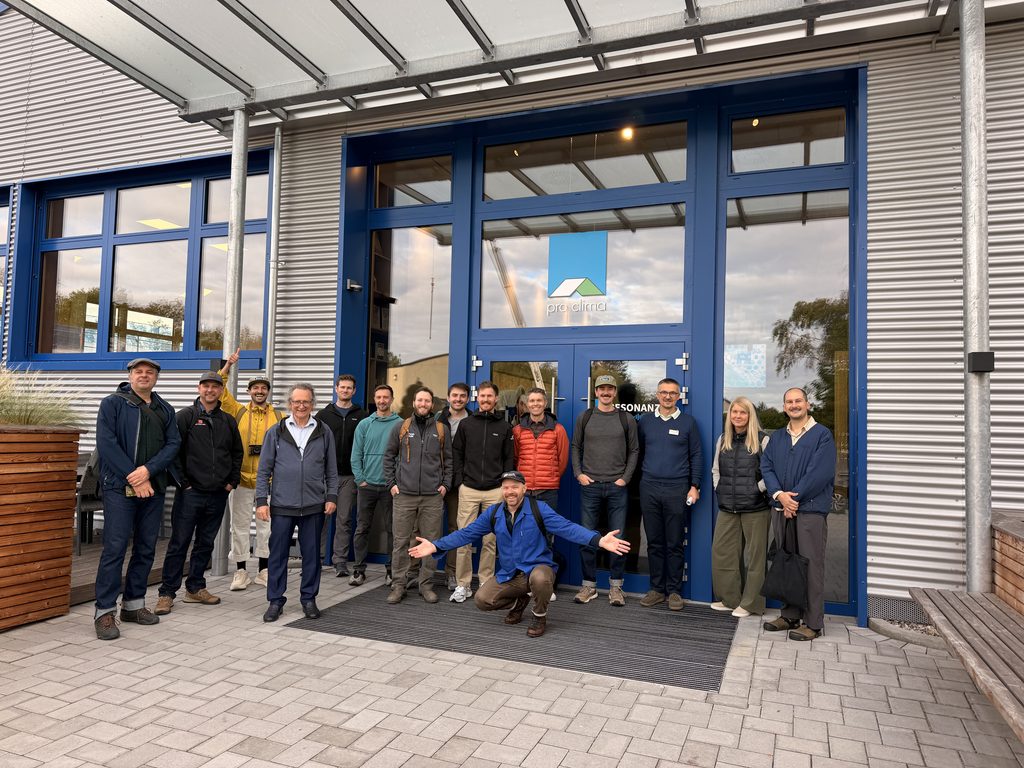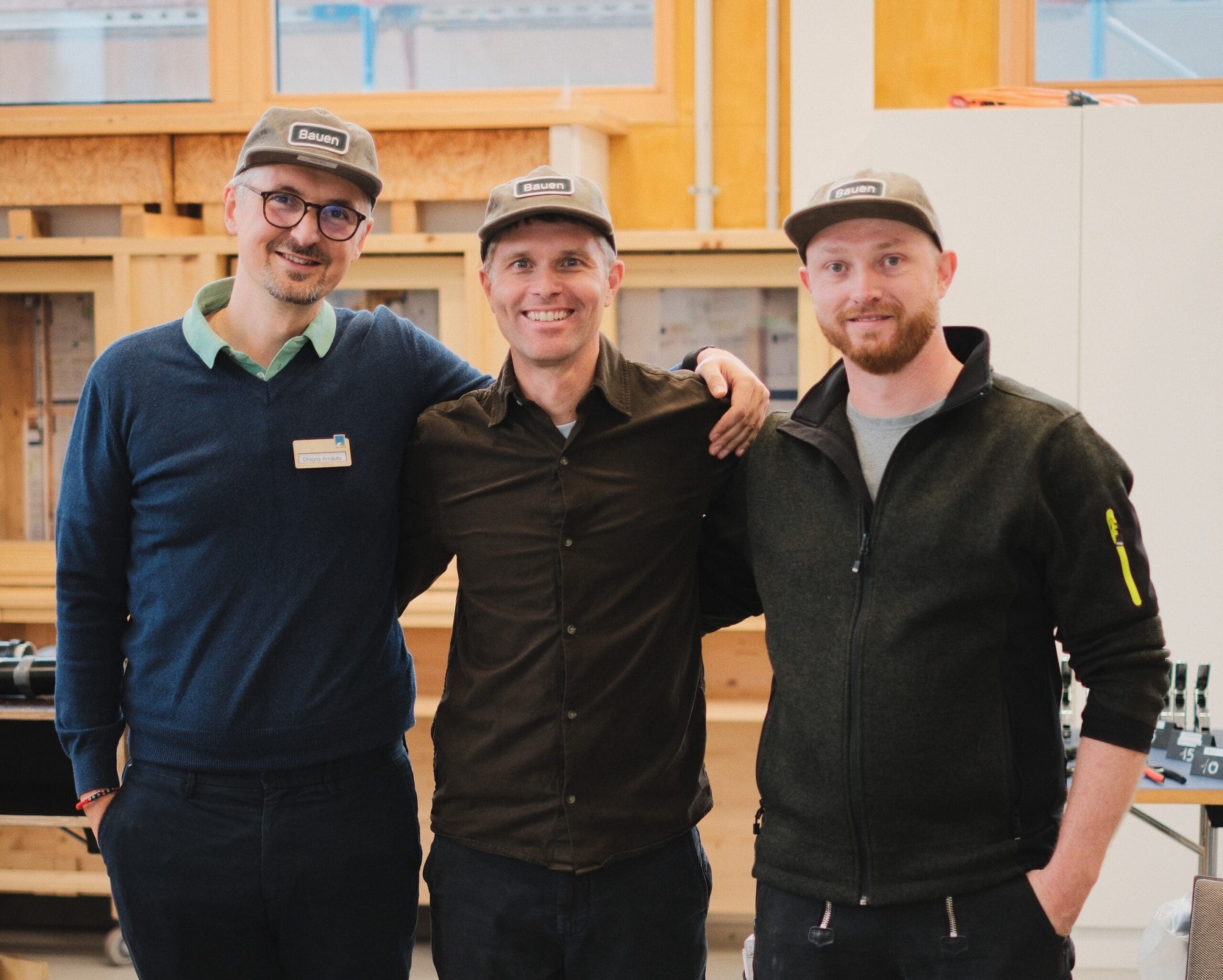
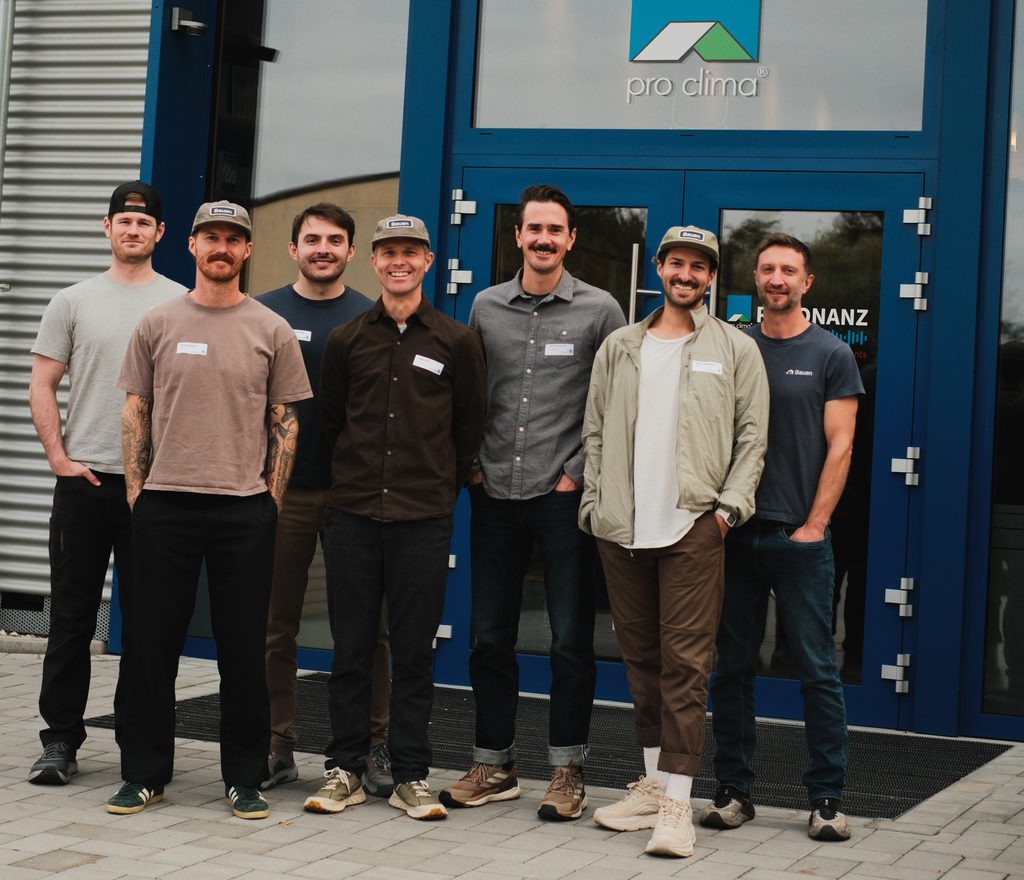
In mid-October (2026), seven members of the Bauen Build team (we missed you Amanda!) traveled to Germany with 475 Supply, other architects and builders to visit Pro Clima, one of our most important building product suppliers. We spent several days learning directly from the people developing the products we use on every project, and came home with new technical knowledge and some unexpected lessons (read below) about how we approach our work.
Learning from the People Behind the Products
At Pro Clima, we worked through product applications, challenging installation details, and conditions that don’t always have straightforward solutions. We also got an early look at products not yet available in the US and learned more about the thinking behind their development.
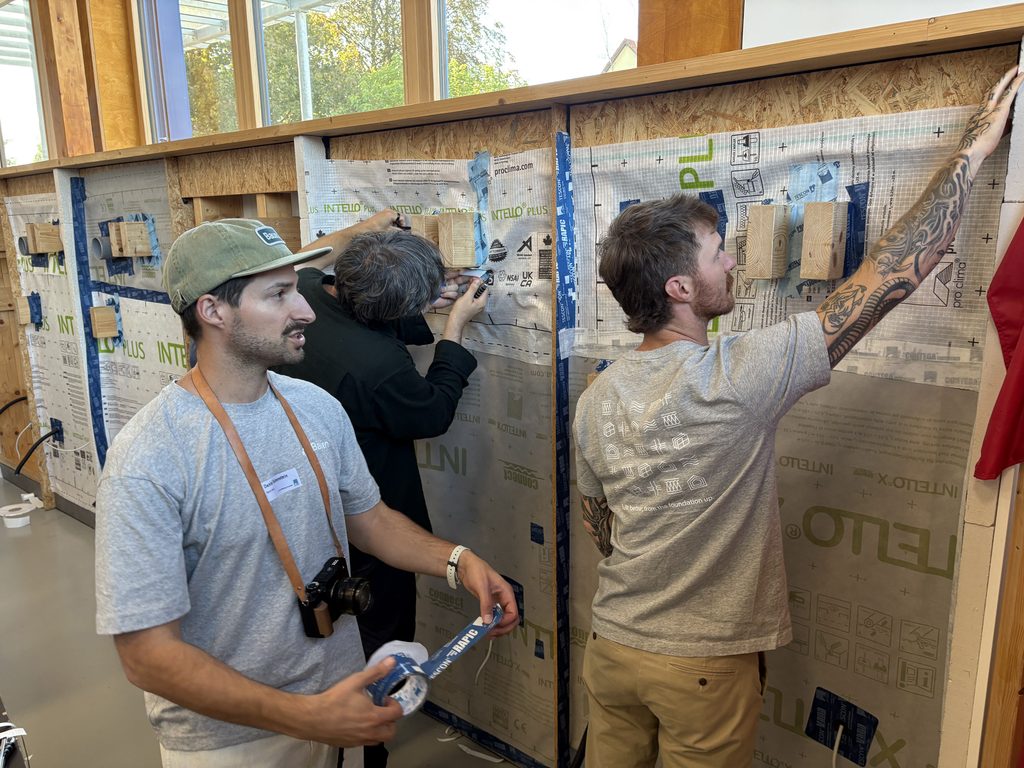
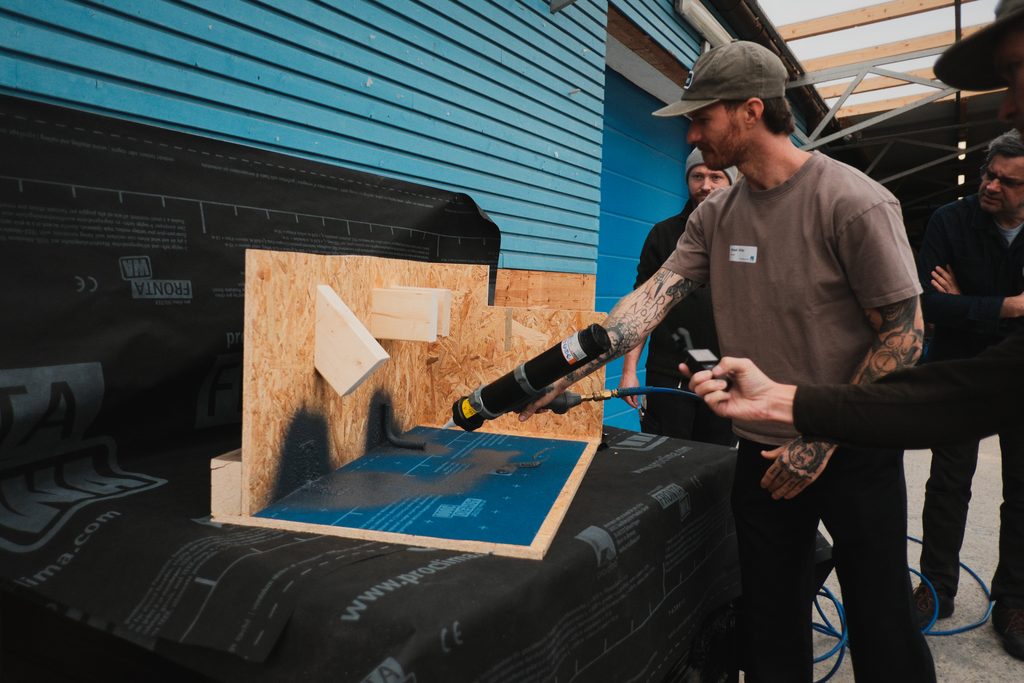
One highlight for our site managers was hands-on time with the AEROFIXX applicator, a spray gun used to apply liquid air barrier materials. Our team was impressed (read: geeked out!) by its ability to seal areas that are difficult to address with traditional membranes or tapes. These details are critical in achieving Passive House construction, and the team is eager to start using the tool on our projects.
Pro Clima also arranged a visit to Hennig Haus, a German company specializing in prefabricated custom homes, timber-frame construction, and window manufacturing. Seeing another company’s approach to precision and robotic prefabrication was a valuable complement to the technical training.
A Different Way to Think About Building a Company
Some of the most memorable conversations were with Lothar Moll, Pro Clima’s founder and former CEO. He spoke about building a company from a place of higher consciousness: treating employees well, contributing to the community, and recognizing that a business has responsibilities beyond its products. He described this philosophy as “might with love, might for good” — using your influence and resources to do something worthwhile for society.
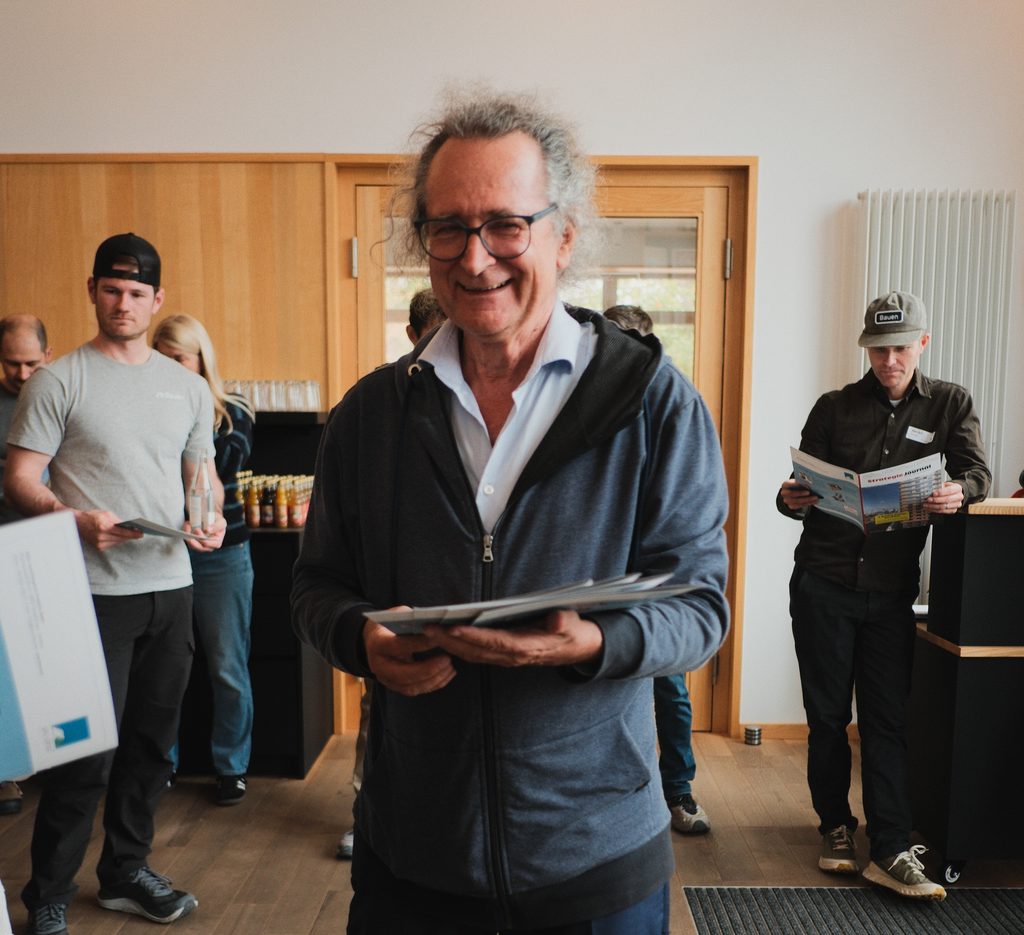
Lothar talked about building a substantial margin between safety and failure, designing products to perform well beyond minimum requirements and withstand the uncertainties that buildings encounter over time. Some Pro Clima adhesives have been independently tested to demonstrate 100 years of reliable performance. It’s an approach that aligns closely with our commitment to building durable, resilient homes that perform for generations.
Lothar also emphasized the value of focus. Pro Clima has turned down opportunities to expand into adjacent categories, like insulation, choosing instead to deepen its expertise in the areas where it can make the greatest impact.
These conversations resonated with us. At Bauen Build, we’ve made a similar commitment to specializing in high-performance custom homes. We’re deliberate about how we communicate with clients, collaborate with architects, and treat everyone involved in a project with respect — from the architect to the person cleaning the jobsite. What struck us was how clearly Pro Clima has defined its principles and incorporated them into everyday decisions.
Another meaningful moment came when the Pro Clima team recognized Bauen Build as one of the builders helping advance high-performance construction in the United States. Hearing that from people who have spent decades developing these products reinforced our commitment to continually improving how we build.
“I’ve not thought about our company in that way, but it really hit home, because at the end of the day, we are trying to deliver a much higher consciousness to the building process, the product we deliver, and the experience.” – Matt Brill
The Value of Craft and Focus
Throughout the trip, we saw people who took enormous pride in their work. That commitment to craft was evident at Pro Clima, Hennig Haus. It was also very clear on our tour of Porsche’s factory and the Sonderwunsch department, where the company creates highly customized vehicles around individual clients’ requests.
Sonderwunsch roughly translates to “special wish,” and the parallels to custom homebuilding were hard to miss. Both involve taking someone’s vision and turning it into something physical, balancing technical requirements, aesthetics, craftsmanship, and personal preferences.
We went to Germany to become better builders. We came home with a strong sense of alignment around the work we do.